




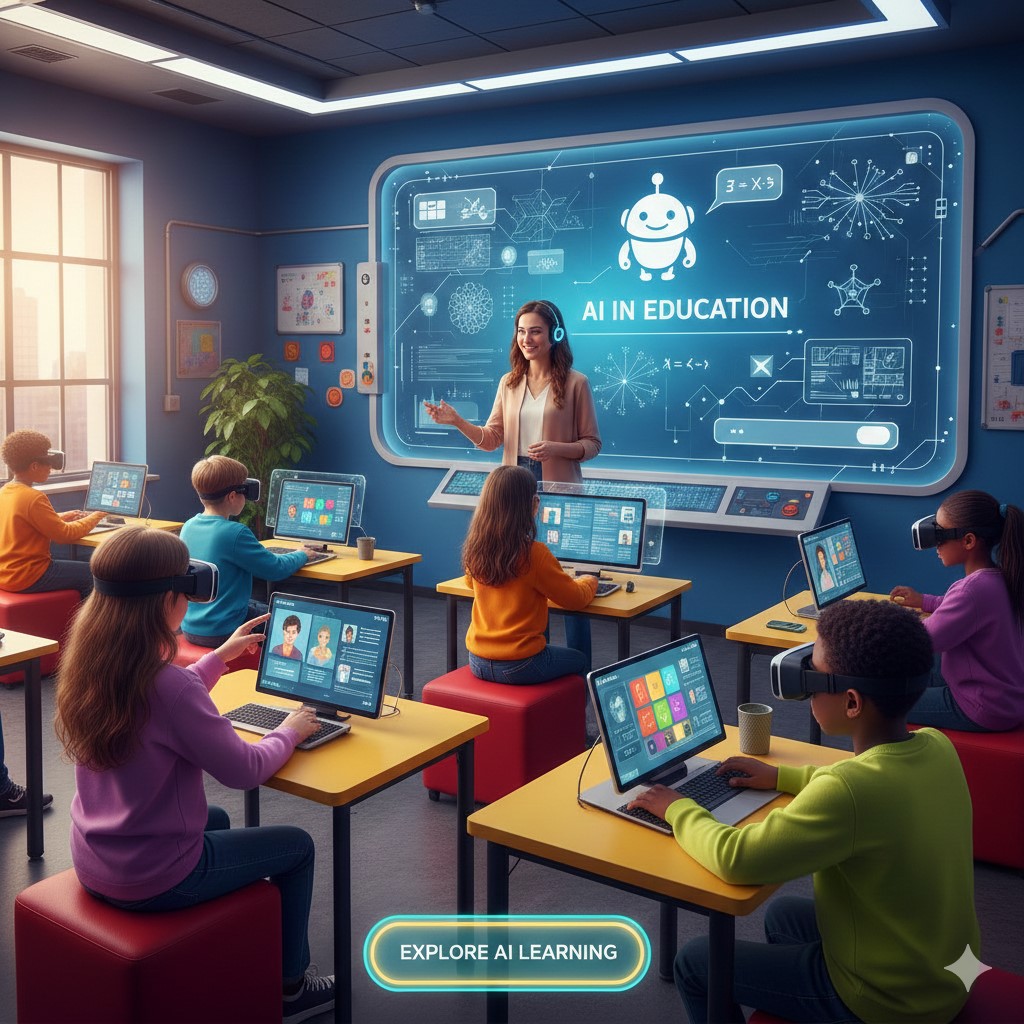
AI in education means using software to help teaching and learning. It uses data and models to personalize lessons. It uses sensors and tools to speed tasks. It helps teachers and students in real classrooms and online.
What is AI in education and how it works? At its core, AI ingests student data. It finds patterns in tasks and tests. It adapts content to each student. It provides feedback and suggestions. It automates grading and administration. It predicts who needs help next. That is how artificial intelligence improves learning outcomes in practical settings.
How AI personalizes learning and adapts content
AI benefits for personalized learning in classrooms show up fast. AI personalized adaptive learning systems examples include platforms that change lessons as students struggle. AI tools for customizing student learning paths let teachers set goals. AI adapts educational content based on performance and pace. Teachers see dashboards with AI personalized learning analytics for educators. These analytics show weak skills and growth.
Adaptive learning uses models to pick the right next task. The system measures response time and correctness. The system then selects a new activity. This makes lessons fit each student. Schools adopt adaptive learning to raise scores and engagement. That is why schools are adopting AI for student success.
Intelligent tutoring and virtual assistants that help students
AI intelligent tutoring systems for individualized support act like a tutor. AI teaching assistants for homework help are available 24/7. AI chatbot tutors for real-time student questions answer common problems. Virtual AI tutors for online learning platforms guide pacing and give hints. These tutors improve student engagement with tutoring tools and keep learners on track.
Intelligent tutoring often uses dialog systems. The tutor asks, hints, and gives feedback. Students get quicker help. Teachers get time back. That explains why AI education tools for teachers and students include tutoring bots and assistant dashboards.
Assessment, grading, and predictive analytics
AI grading and assessment automation tools for schools save time. These tools score quizzes and flag essays for review. Predictive analytics for student performance outcomes spot struggling learners. AI tools identifying at-risk students before dropping out alert counselors early. Adaptive AI exam proctoring and security systems help keep tests fair. Data-driven decision making in education with AI helps principals allocate support.
Predictive models use attendance, grades, and engagement. The models forecast outcomes weeks ahead. That gives time for intervention. Schools use these insights to improve retention and success.
AI content creation and curriculum tools
AI content creation tools for lesson planning speed prep. Generative AI for creating quizzes and learning materials saves teachers hours. AI content generation for dynamic curricula updates content based on standards. AI-powered curriculum design for modern education helps scale courses across grades. In short, AI accelerates educational content development and reduces teacher workload.
Systems can draft lesson outlines and quizzes. Teachers review and tweak. That keeps professional judgment at the center. The result? Faster content updates and better alignment with learning goals.
EdTech innovation: AR/VR, AIoT, and gamification
AI and AR/VR create immersive learning experiences. AI-enabled IoT classrooms use sensors to personalize lighting and sound. AI and gamification improve interactive learning outcomes with badges and micro-goals. AI education apps for remote and hybrid learning mix video, quizzes and AI feedback. Students gain practical skills and stay motivated.
AI literacy skills students must learn by 2026 include data basics and ethical thinking. Schools add projects that teach how AI models work and how they can be used responsibly.
Administration and school operations powered by AI
AI tools for school scheduling and admissions automation reduce admin load. How AI streamlines educational administration tasks is simple: it automates routine work. AI school management software benefits include attendance tracking, performance dashboards, and resource allocation using AI for educational planning. Systems predict staffing needs and optimize budgets.
These tools free administrators to focus on strategy. That improves overall school performance.
Ethics, accessibility, and responsible AI use
Ethics of AI in education and responsible implementation is essential. Schools must avoid biased models. They must protect student privacy. How AI supports inclusive learning for students with disabilities is a major benefit. AI can provide text-to-speech, captioning, and adaptive content.
Ethical AI guidelines for schools and educators should include transparency and consent. Data privacy concerns with AI in classrooms require strong policies. Equitable AI adoption strategies in public education ensure all students gain access.
AI and assessment security
Adaptive AI exam proctoring adds security for remote testing. Systems analyze webcam video, audio, and browser activity. They flag suspicious behavior for human review. That balances fairness and privacy. Schools must set clear rules and inform students.
Real examples and case studies that show results
A K-12 district used an AI adaptive platform to raise reading scores. The platform used AI personalized learning analytics for educators to guide instruction. Teachers used targeted small-group lessons. Scores improved in months.
An online university used AI intelligent tutoring systems for coding classes. Students got 24/7 help from AI chatbot tutors for real-time student questions. Pass rates climbed. Dropout rates fell.
A small school used AI grading and assessment automation tools for rapid feedback. Teachers spent less time grading. They spent more time coaching students. Engagement rose markedly.
These case studies show clear outcomes. They show how AI education tools for teachers and students produce real benefits.
Tech terms explained simply
Adaptive learning means content changes to fit the student.
Predictive analytics means models that forecast student success.
Generative AI creates quizzes, prompts, or lesson drafts.
AIoT is AI combined with IoT, like smart classrooms.
These short definitions help readers grasp key ideas fast. The result? Faster understanding and better decisions.
Future trends and what to watch by 2026
Top AI education trends to watch in 2026 include better personalized learning tools. Expect wider use of AI powered curriculum design. Look for more AI-enabled IoT classrooms and AR/VR lessons. The future of AI teaching and learning technology will push adaptive, data-driven learning.
The forecast for next-gen educational experiences points to tighter integration of AI and human instruction. Emerging AI research topics in education technology will focus on fairness and explainability.
Practical steps for schools and teachers
Start small. Pilot one AI tool. Track clear metrics. Use AI to save time on grading or scheduling. Use AI personalized adaptive learning systems examples to run targeted pilots. Train staff on ethics and privacy. Scale what works.
Ask vendors how the system protects data. Ask for validation studies and support. Make sure AI content creation tools for lesson planning are easy to edit. Ensure the system integrates with your LMS and student data systems.
Conclusion
AI in Education changes how we teach and learn. It enables personalized learning and adaptive learning at scale. It provides AI tools for customizing student learning paths. It offers intelligent tutoring systems and virtual assistants for real-time help. It powers AI grading and predictive analytics to spot at-risk students early. It speeds content creation and builds dynamic curriculum updates. It helps run school operations more efficiently. It raises big ethical questions that schools must manage.
Start with clear goals and pilot wisely. Use AI to support teachers and learners. Keep privacy and fairness at the center. With care, AI in education will improve learning outcomes and help more students succeed.
FAQs
What is AI in education and how it works?
AI in education uses data and models to adapt learning, grade work, and predict outcomes.
How does AI improve learning outcomes?
AI personalizes content, gives fast feedback, and highlights students who need help.
Are AI tools safe for student data?
They can be. Choose vendors with strong privacy and data protection policies.
Can AI replace teachers?
No. AI supports teachers. It automates routine tasks and enhances instruction.
Which AI tools help with assessment?
Look for AI grading tools, predictive analytics, and secure proctoring systems.